
We live in an era where the most valuable resource is not money, but time.We are constantly looking for ways to optimize our routines, reduce stress, and improve our environment.This is where technology takes a fundamental leap for daily life: it's no longer just about screens or mobile devices, but about how the physical space we live in or work in can "think" for us.
If you've ever heard words like "home automation" or "smart homes" and they seem like distant or complex concepts, this article is for you.We're going to break down what they really mean and how the transition to an intelligently integrated space can transform your quality of life.
What is home automation?
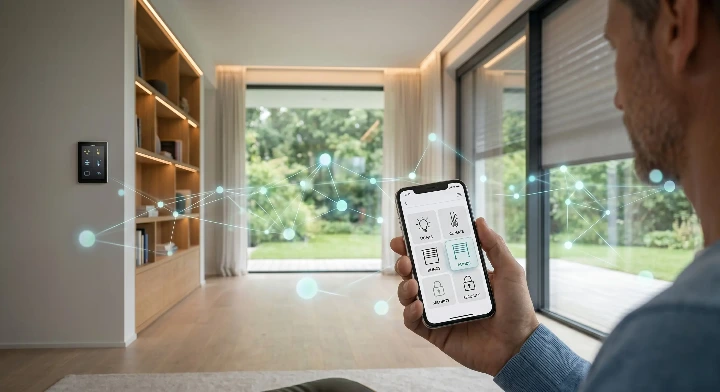
The Engine of Automation
The word home automation comes from the combination of domus (house in Latin) and telematics (information technology).In simple terms, home automation is the set of technologies applied to the control and automation of a home or building.
Imagine home automation as the "muscles and nerves" of a structure.It consists of installing hardware and software (sensors, motors, relays, and network connections) that allow a device to perform an action without you having to do it manually.
Examples of basic home automation:
A blind that lowers when you press a button on your phone.
Lights that turn on when they detect movement in a hallway
A thermostat that you can program for a specific time.
However, having several isolated devices (controlled by five different apps on your phone) doesn't necessarily mean you live in a truly smart environment.This is where the next level comes in.
What is a Smart Space?
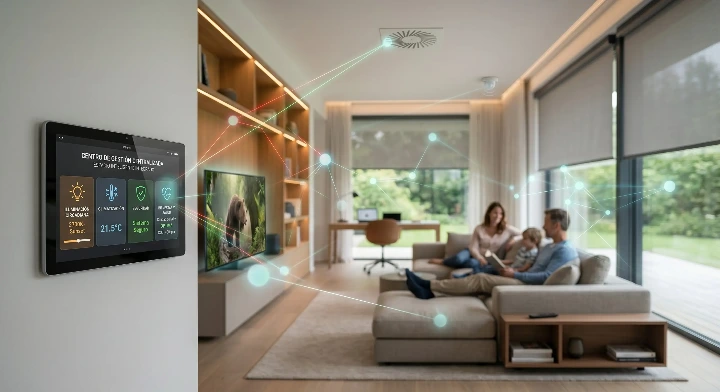
The Complete Ecosystem
If home automation is the muscles, a Smart Space is the brain and consciousness of the place
A smart space transcends the concept of the traditional dwelling.It can be your home, your office, a clinic, or even an industrial facility.It's defined as an environment where all the technology (lighting, climate control, security, audiovisual) is perfectly integrated into a single, centralized management system.
The fundamental difference lies in proactivity and unification.A smart space doesn't wait for you to take out your phone to turn on a light;it already knows you've arrived, assesses how much natural light is coming through the window, and adjusts the lighting to the perfect level, while regulating the temperature to your liking and deactivating the security alarm.
The Key Difference: Control vs. Integration
Home Automation (Control): You have a Wi-Fi bulb and use an app to change its color.You have to tell each device what to do individually.
Smart Space (Integration): You activate "Movie Night" mode on a single touchscreen or with your voice.The system gently dims the lights, lowers the blinds, turns on the TV, adjusts the sound, and puts the climate control in silent mode.Everything happens simultaneously because a central control unit coordinates all the devices.
The Real Impact:
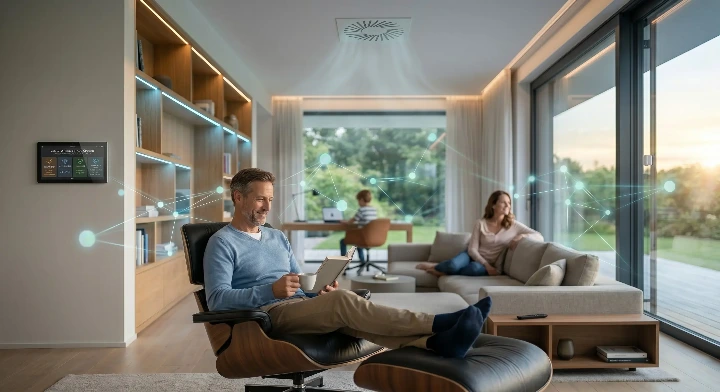
Why Do You Need an Integrated Space?
Implementing a professionally managed ecosystem isn't an aesthetic luxury;it's a functional tool for regaining control of your life.Here's how it impacts different areas:
1. Maximizing Time and Reducing Stress
Think about the daily "micro-processes": turning off forgotten lights, checking if you locked the door, adjusting the thermostat, watering the garden.A smart space takes care of these tasks through automated routines.By freeing yourself from the operational management of your environment, you reclaim valuable minutes each day and eliminate the mental fatigue of "remembering to do things."The environment works for you.
2. Health and Wellbeing
Automation has a direct impact on human biology:
Circadian Lighting: The system automatically adjusts the light tone throughout the day.Cool tones in the morning to energize you, and warm tones at night to prepare your brain for deep, restorative sleep.
Air Quality: Sensors can detect high levels of CO2 or humidity and automatically activate exhaust fans or air purifiers, protecting your respiratory system.
3. Productivity in the Workplace
In an office or business, a smart space is a catalyst for efficiency.Meeting rooms prepare themselves when they detect movement: the screen turns on and the climate adjusts.By maintaining optimal oxygen and temperature levels, teams can stay focused for longer.
4. Energy Efficiency and Savings
An integrated system is deeply energy-conscious.If you open a window, it automatically turns off the air conditioning.If a room is empty, it turns off the lights.In the long run, the space pays for itself through smart consumption.
Conclusion:
The Value of Technological Architecture
Anyone can buy a smart plug, but creating a space that breathes, anticipates, and flows with your lifestyle requires true technological architecture.
The key to success isn't the number of devices you buy, but how they communicate with each other.Having a professional integration that centralizes these technologies into a single, easy-to-use system is what transforms a conventional building into a true ally for your well-being.The future lies in having an environment so intelligently designed that technology becomes invisible, leaving you time for what truly matters.